Quick takeaways
- Narrative first, slides second. AI can format a story, but it cannot invent your insight.
- Every slide should answer one question. Dense slides hide weak thinking.
- Use AI for market sizing frameworks and competitor summaries, then verify every number and claim.
How to pitch your startup
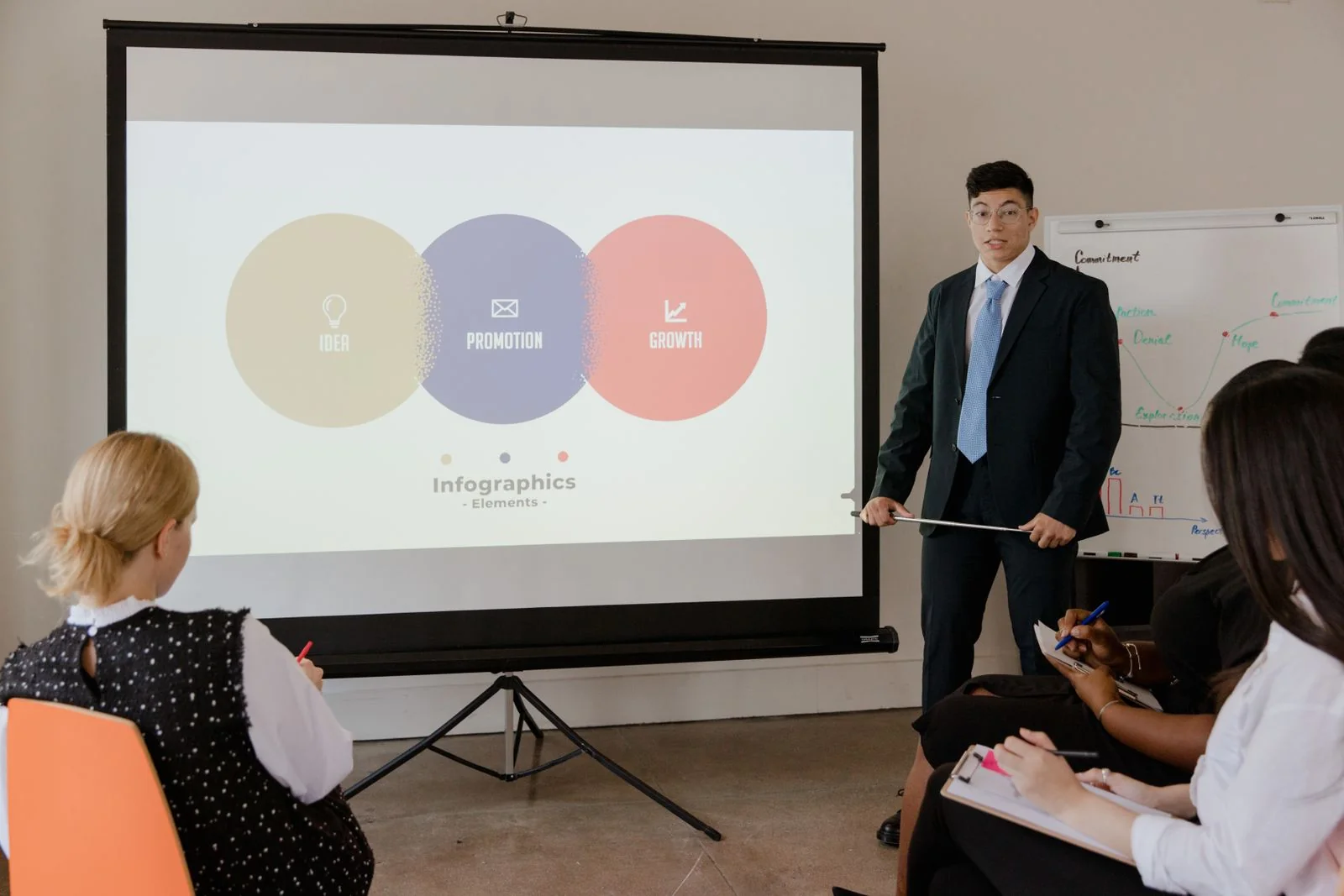
Kevin Hale explains how to craft a clear, compelling startup pitch.
Narrative structure
A great pitch deck is a logical story: here is the problem, here is why it matters, here is our unique insight, here is the proof, and here is what we need. AI can help you turn a brainstorm into that arc.
Workflow: Write a one-page founder memo → AI suggests a narrative arc → Choose the structure that matches your stage and audience → Expand each beat into slides → Practice the spoken story.
| Slide | Job of the slide | Common mistake |
|---|---|---|
| Hook | Grab attention with the problem or insight | Starting with the product instead of the customer pain |
| Problem | Define who has the pain and why it is urgent | Describing a problem everyone already knows vaguely |
| Solution | Show the product and the moment of relief | Feature lists without outcomes |
| Market | Size the opportunity and the path to capture it | Top-down TAM without bottom-up validation |
| Traction | Prove momentum with metrics and logos | Vanity metrics without trend lines |
| Team | Explain why you are the right people | Generic bios without relevant wins |
| Ask | State the round, use of funds, and milestones | Leaving the ask vague |
Slide drafts
Once the narrative is clear, AI can draft each slide as a headline, a one-line claim, and a supporting bullet. Your job is to cut, sharpen, and add proof.
Workflow: Feed the narrative to the model → Ask for one slide per section → Review each slide for a single message → Add visuals, numbers, or quotes → Iterate after practice pitches.
Ask the model to be concise. A useful rule: if a slide needs more than 30 seconds to explain, it is too complicated.
Market sizing
Market size is where decks often fall apart. AI can build a framework, but the inputs must come from verified sources and your own customer conversations.
Workflow: Define the customer segment and price point → Collect public data and customer evidence → AI structures TAM, SAM, SOM → Sanity-check assumptions with advisors or investors → Show the bottom-up path.
Competitor slides
A competitor slide should show you understand the landscape and have a clear angle. AI can summarize competitor positioning, but only you can define why you win.
Workflow: List direct and indirect competitors → AI summarizes their messaging, pricing, and perceived strengths → Map them on two axes that matter to buyers → Define your differentiated position → Verify claims with primary sources.
Avoid the lazy "we are the only ones" claim. Investors have seen it before. Show respect for the market and a specific wedge.
Investor Q&A prep
The deck gets the meeting. Q&A gets the term sheet. Use AI to anticipate objections and practice crisp answers.
Workflow: Share the deck with the model → Ask for the 20 most likely questions → Draft concise answers → Practice out loud and time responses → Update the deck to preempt the hardest questions.
Prompt example: "Here is my pitch deck. List the 15 toughest questions an investor might ask, group them by topic, and draft a one-paragraph response for each. Flag any question I cannot answer with current data."
Master prompt example
Prompt: "I am preparing a seed-stage pitch deck for a vertical SaaS product. Turn this one-page founder memo into a 10-slide deck outline. For each slide, provide a headline, a one-sentence takeaway, and one proof point. Then size the market as TAM, SAM, and SOM with the assumptions I should verify."
This prompt works because it gives the model stage, format, and the decisions you need to support. Treat the output as a strong first draft, not a final deck.
Without AI vs. with AI
| Task | Without AI | With AI |
|---|---|---|
| Narrative structure | Founders stare at a blank deck and rearrange slides endlessly. | AI suggests a slide outline from a written one-page narrative. |
| Market sizing | TAM numbers are pulled from reports without clear logic. | AI builds a bottoms-up sizing model for founder validation. |
| Competitor slides | Competitors are listed without a clear positioning wedge. | AI structures a landscape map and differentiation narrative. |
| Proof points | Claims are made without supporting metrics or evidence. | AI flags which slides need numbers, logos, or customer quotes. |
| Q&A preparation | Founders guess at likely investor objections. | AI generates likely questions and draft answers from the deck. |
FAQ
Can AI write my entire pitch deck?
It can draft structure and content, but the insight, proof points, and founder voice must come from you.
How many slides should a pitch deck have?
Most seed and Series A decks are 10 to 15 slides. Fewer is better if every slide earns its place.
Should I use AI-generated market size numbers?
No. Use AI to structure the analysis, but source every number from verified data or your own pipeline.
How do I make competitor slides credible?
Be specific, name real competitors, and explain your wedge. Avoid claiming you have no competition.
Can AI help with design?
Some tools can generate layouts, but clarity beats decoration. Start with a clean template and refine.
How do I practice the pitch with AI?
Have the model play the investor and ask hard questions. Record your answers and iterate.
How do I keep AI from making my deck too wordy?
Ask AI for one headline, one number, and one proof point per slide, then cut everything else.
Should I use AI-generated visuals in my deck?
Use AI for rough layouts, but prioritize clarity and credibility over decorative graphics.
How do I practice my pitch with AI?
Have AI play a skeptical investor, ask hard questions, and give feedback on your recorded answers.
Can AI help with my verbal narrative, not just the slides?
Yes. Paste your slide outline and ask AI to draft speaker notes that connect each slide to a single story arc.