Quick takeaways
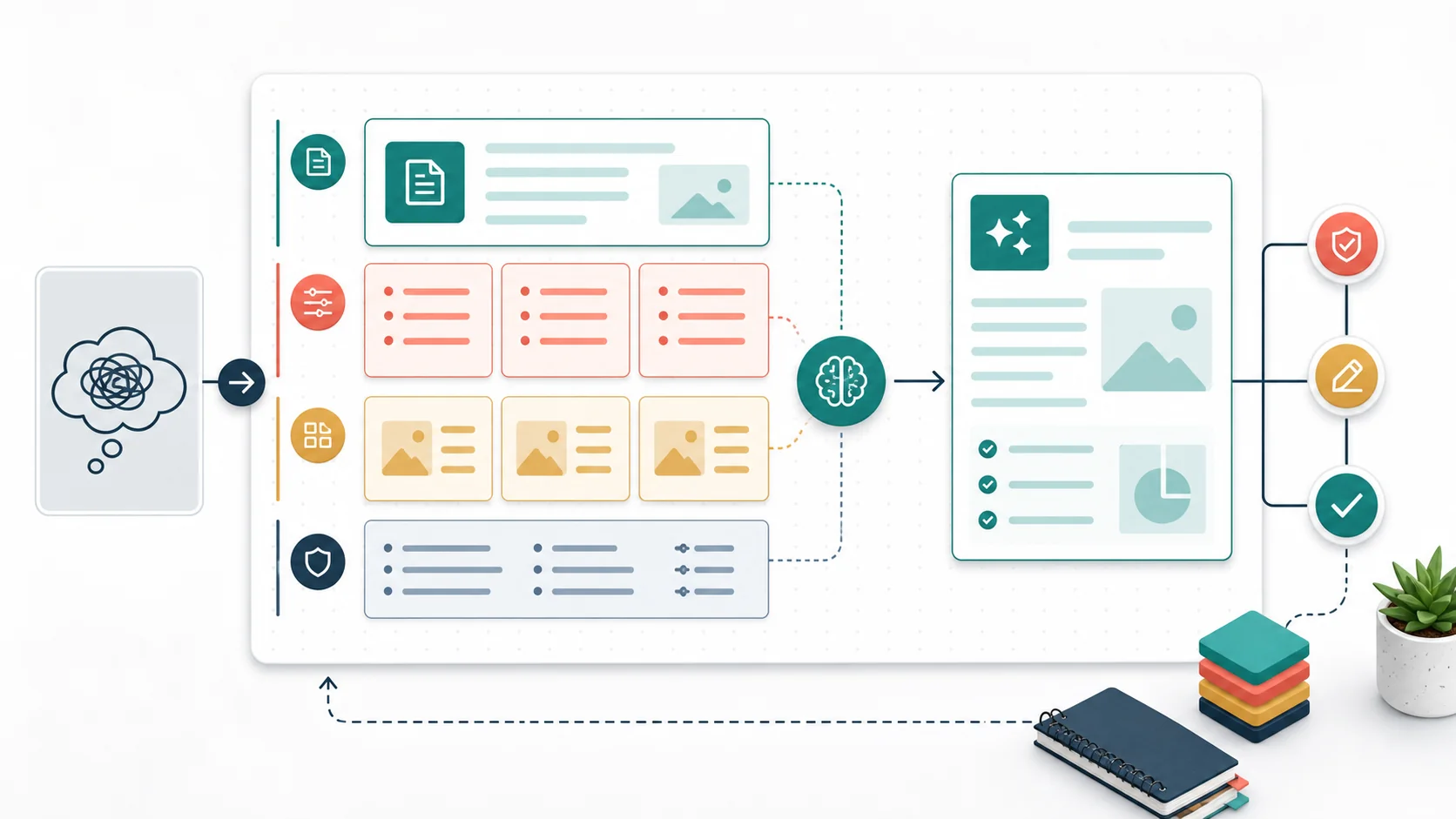
- A strong prompt defines the task, audience, context, output format, and quality bar.
- Prompts for founders, developers, and marketers should include review criteria, not just instructions.
- The best reusable prompts become small operating procedures for repeatable work.
Prompt engineering fundamentals
DataCamp covers how to write reusable, high-quality prompts for different workflows.
Why prompt engineering still matters
Modern AI tools are powerful, but they still depend on the quality of the task you give them. A good prompt reduces ambiguity, gives the model the right context, defines the output shape, and makes the result easier to evaluate.
My rule of thumb: if you would not give the task to a smart intern without context, do not give it to an AI tool without context either.
Prompt engineering is not about magic words. It is about operational clarity. You are turning a vague request into a brief that includes context, constraints, examples, and a way to judge the output. That is why the same skill helps founders write investor updates, developers use coding agents, and marketers build content workflows.
The prompt engineering checklist
- Task: State the job in one clear sentence.
- Audience: Name who the output is for and what they already know.
- Context: Provide the relevant background, constraints, source material, and examples.
- Output format: Ask for bullets, a table, JSON, a draft email, a checklist, or another specific structure.
- Quality bar: Define what a good answer must include and what it should avoid.
- Assumptions: Ask the model to state assumptions when information is missing.
- Review: Compare the output against a rubric before using it.
The anatomy of a strong prompt
A strong prompt usually has five parts. First, it names the outcome. Second, it gives the background needed to make good decisions. Third, it includes source material or examples. Fourth, it defines constraints. Fifth, it tells the AI how the answer will be reviewed.
Reusable prompt template
Prompt quality scorecard
Prompt examples by use case
- Founders: Turn ten customer notes into themes, objections, pricing signals, and next experiment ideas.
- Marketers: Turn a customer interview into landing page bullets with claims separated from evidence.
- Product teams: Convert rough notes into a PRD with user stories, risks, metrics, and open questions.
- Developers: Ask an AI coding agent to inspect the repo first, propose a small change, implement it, and run tests.
- Research: Summarize sources with citations, uncertainty, and a list of claims that need verification.
Prompt patterns worth saving
- Critique pattern: Ask AI to review a draft against a checklist before rewriting it.
- Comparison pattern: Ask AI to compare options using criteria you define, not criteria it invents.
- Extraction pattern: Ask AI to pull structured fields from messy notes, calls, tickets, or documents.
- Transformation pattern: Ask AI to convert one artifact into another, such as notes into a brief or code comments into docs.
- Planning pattern: Ask AI to propose steps, risks, dependencies, and verification before execution.
Hands-on tutorial: improve a weak prompt
Weak prompt: Write a blog post about AI tools.
Better prompt: Write an outline for a beginner-friendly SEO article about the best AI tools for founders. Audience: non-technical founders. Goal: help them choose tools for research, writing, coding help, automation, and customer support. Include H2 headings, search intent, tool categories, evaluation criteria, and a short FAQ. Avoid hype and do not recommend tools without explaining the use case.
The better version works because it defines audience, intent, structure, evaluation, and constraints. It also prevents a common failure: generic recommendations without a real use case.
Common prompt mistakes
The most common mistake is asking for a polished answer before defining the decision you need to make. Other mistakes include skipping context, not specifying format, asking for too many tasks at once, and using output without review.
- Too vague: "Make this better" rarely produces reliable work.
- Too broad: Asking for strategy, copy, analysis, and implementation in one prompt usually lowers quality.
- No source material: AI fills gaps when you do not provide facts.
- No review criteria: You cannot improve what you cannot evaluate.
How to turn prompts into team assets
Once a prompt works three times, save it. Give it a name, owner, intended use, input format, output format, and review checklist. This turns prompt engineering from an individual trick into a shared operating system for your team.
Without AI vs. with AI
| Task | Without AI | With AI |
|---|---|---|
| Defining the task | A vague one-line request produces generic output that misses the point. | The checklist breaks the task into role, goal, constraints, and output format. |
| Providing context | The model fills gaps with assumptions and invented details. | The prompt includes audience, source material, and background needed for good decisions. |
| Controlling format | Output arrives as paragraphs when a table, JSON, or checklist was needed. | Explicit output shape and examples guide structure and reduce cleanup. |
| Reviewing output | Every user invents their own quality bar, so consistency suffers. | The checklist defines evaluation criteria before the prompt is run. |
| Reusing prompts | Good prompts live in chat history and are lost when someone leaves. | Documented prompts become team assets with input, output, and review steps. |
FAQ
What is prompt engineering?
Prompt engineering is the practice of writing clear instructions, context, examples, constraints, and evaluation criteria so an AI system can produce a useful output.
Do examples improve prompts?
Yes. Examples are useful when tone, format, edge cases, or quality standards matter.
Should every prompt be long?
No. Use short prompts for simple tasks. Use structured prompts when the output affects decisions, customers, code, or repeatable workflows.
What makes a prompt reusable?
A reusable prompt has a stable task, a clear input format, a predictable output format, and a review checklist. It should not depend on hidden context in one person's head.
How should developers prompt coding agents?
Ask coding agents to inspect first, make a small plan, change only relevant files, run checks, and summarize verification. See the AI coding agents guide for the full workflow.
How do I start improving a prompt?
Pick one prompt you use repeatedly and add task, audience, context, output format, and one example.
What is the role of examples in a prompt?
Examples reduce ambiguity by showing the model the tone, structure, and edge cases you expect.
Should I ask the model to list assumptions?
Yes, when information is missing. It helps you spot hidden guesses and fill gaps before using the output.
How do I evaluate prompt quality?
Check clarity, context, format specificity, and whether the output meets the stated quality bar.
Can a prompt be too long?
Yes. Add only details that remove ambiguity. Long prompts with filler can distract the model.